
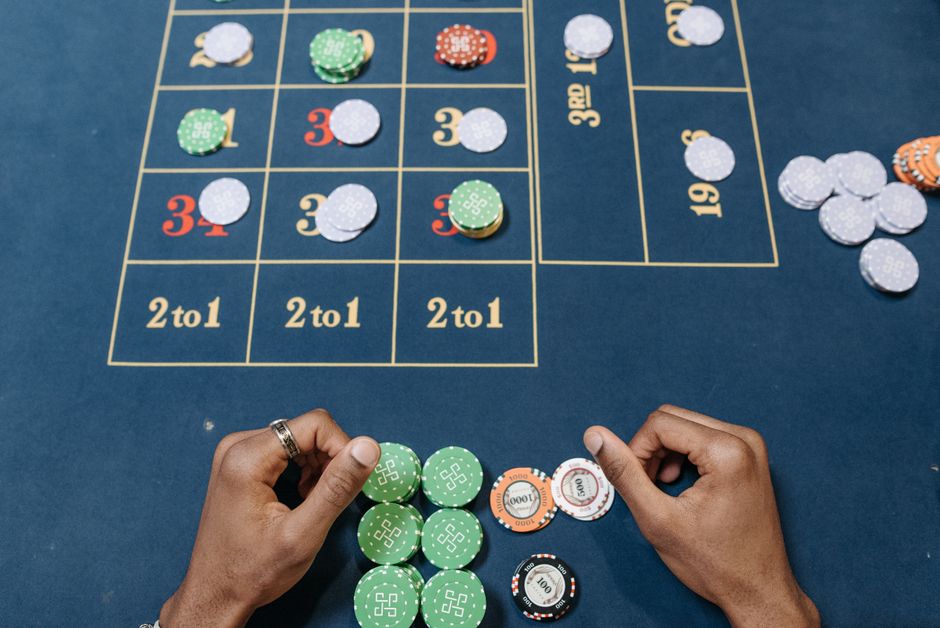
Every gambler has heard the phrase, usually from a smug friend who just watched them lose a hand of blackjack. "The house always wins." It sounds like wisdom. In reality, it's a lazy shortcut that collapses under scrutiny. The house wins on average, over enough hands, on specific bets. It doesn't win every session, every spin, or every table. Understanding the gap between that cliché and the actual math is the difference between a player who walks away frustrated and one who walks away informed.
Let's dig into how casino economics really work, and why anyone who takes slots, poker, or sports betting seriously should care about the number behind the curtain.
The house edge is the mathematical advantage the casino holds on any given wager, expressed as a percentage of your total stake over the long run. It's not a fee you see at the window. It's baked into the payouts.
Consider American roulette. A wheel with 0 and 00 has 38 pockets. If you bet $1 on red, you win $1 (plus your stake back) when red hits, which happens 18 times out of 38. The expected value of that $1 bet is roughly -$0.0526. That's a 5.26% house edge. European roulette, with a single zero and 37 pockets, drops that edge to 2.70%. Same game, same rules, nearly half the tax.
Here's how some common games compare:
That slots figure deserves attention. On a machine with a 10% edge, your expected loss per $100 wagered is $10 — but that wager is per spin, and slots players routinely cycle through hundreds of spins per hour. A 3% edge on a video poker game sounds close to the 5.26% roulette figure, but the volume of hands matters enormously.
The point isn't to avoid high-edge games like they're poison. It's to know which tax bracket you're playing in.
Two slot machines can share the exact same RTP (return to player) — say 96% — and deliver completely different experiences. One pays small, frequent wins. The other pays rarely but massively. That difference is volatility, and it's arguably more important than the edge for most players.
Low-volatility games stretch your bankroll and stretch your patience. High-volatility games offer the shot at a five-figure payout but can wipe a $200 balance in a dozen spins without a single return.
This is why comparing slots across platforms is mostly a study in volatility, not just RTP. A 94% RTP high-volatility game might be a better fit for someone chasing one big score; a 97% low-volatility game might suit a player who just wants a long, relaxed grind. Neither choice embarrasses the other.
Poker sits in its own category here. It's not a bet against the house; it's a bet against opponents, with the house taking a rake or tournament fee. A strong player can sustain a positive expected value against weaker opponents indefinitely, which is impossible in pure casino games. That's the fundamental distinction between poker and, say, roulette. You can read more about it on สล็อตเว็บตรง.
New players often treat bankroll management as dressing: something to mention in a forum post, not something that changes outcomes. It's the opposite. Bankroll management determines whether you survive variance long enough for the edge — yours or the house's — to shape your results.
A practical starting framework:
Professional gamblers on the poker circuit tend to talk about bankrolls in terms of units and hundreds of buy-ins, all because variance doesn't negotiate. The casino's edge only needs enough hands to grind you down; without discipline, you give it that time for free.
Promotions are central to the modern iGaming landscape, and they range from genuinely valuable to nearly impossible to clear. The key term is "wagering requirement," usually expressed as a casino bonus plus its attached multiplier.
A $100 bonus with a 40x wagering requirement means you must wager $4,000 before withdrawing any winnings tied to the bonus. At a 96% RTP, that $4,000 of wagering has an expected cost of $160. Since the bonus was only $100, the promotion is underwater in expected value unless the RTP is higher, the wagering lower, or the game selection favorable. A 20x requirement on the same bonus flips the math decisively toward the player, even at a slightly worse RTP.
Look for several details:
Free spins offers deserve the same scrutiny. Fifty spins with a fixed value and a 30x winnings requirement can be worth real money, or can lock you into a cycle that ultimately favors the operator. Check the fine print before depositing a cent.
Skill matters unevenly across the iGaming universe. In poker, it's nearly everything in the long term. In blackjack, basic strategy can cut the house edge from 2% to 0.5%. In sports betting, line shopping and accurate models can outperform the closing line. In slots, there is no skill — only game selection, bet sizing, and bankroll discipline. And in keno or casino war, the math is essentially fixed.
Gamblers frequently invent patterns that don't exist: hot streaks on a slot machine, cold dealers, slots "due" to pay after a quiet stretch. Random number generators have no memory. Each spin, each hand, each roll is independent. That isn't a small detail — it's the entire structure of the game.
The gambler's fallacy is expensive, and its cousin, loss chasing, is worse. Chasing a $200 loss with aggressive play typically doesn't recover the loss; it enlarges it. Recognising that impulse in yourself is worth more than any betting system sold online.
The house edge is real, but it isn't fate. It's a variable — one of several — that smart players account for alongside volatility, bankroll size, bonus structures, and their own psychological limits. Playing wisely doesn't mean winning every session. It means understanding which games offer the best terms, wagering the right amount relative to your resources, and walking away with your bankroll intact when the math and your mood both say so.
Treat the casino as a business you're negotiating with, not an enemy to defeat. Read the numbers. Respect the variance. The bettors who do that are the ones who still have something left when the luck swings back around.

Hi, my name is Anthony kuber. I am artist and fashion designer.
I love to travel and writing blogging.
Your email address will not be published. Required fields are marked *
Software Developer & Writer
Hey, I'm Diva, a developer and writer blending code and creativity. I'm driven by a deep curiosity and a relentless pursuit of excellence. Join me as I craft digital solutions and captivating stories.


